
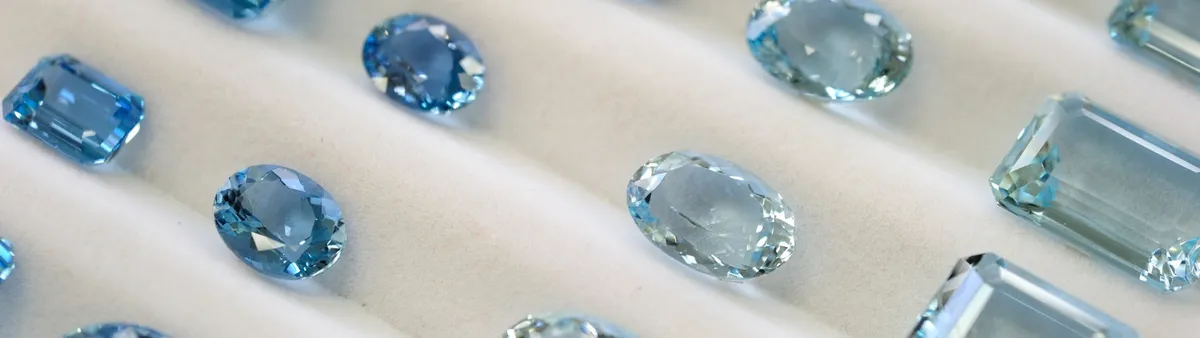
Looking for gift ideas for a March baby? Learn all about aquamarine’s origins, cultural significance, symbolism, jewelry design tips, and more to give yourself or your loved ones a truly meaningful and memorable present. Check out our aquamarine guide!
The Origin and History of the Aquamarine Birthstone
Derived from the Latin words aqua and marina, the aquamarine stone definitely lives up to its name. Meaning “water” and “of the sea,” or more simply just “sea water,” this greenish-blue gem brings with it the serenity of early-morning ocean waves.Much like its etymology, the mythologies surrounding this gem largely call back to the open seas. Some asserted that Poseidon created it from just seawater, while other legends say that the gem was a gift from Neptune.
Travelers, sailors, and fishermen from ancient times believed that aquamarine kept them safe, their ships afloat, the seas calm, and their catch bountiful. They would carry with them talismans with the image of their sea god for protection and luck.
Besides these, there are also claims that the gem came from either the treasure chests or tails of mermaids. Thanks to its many mystical origin stories, people came to believe that the gemstone held special healing properties.
Aquamarine was used to treat illnesses of the mind, thyroid, heart, stomach, liver, throat, jaws, teeth, eyes, and ears, among other things. I was also used to treat allergic reactions and bloating, as well as prevent poisoning. Medicinal concoctions made from powdered aquamarine or the water a whole gem was soaked in were the two main ways it was used for healing.
This gem’s popularity is not only because of its purported therapeutic properties but also for its mesmerizing beauty. Jewelry and amulets made with aquamarine date back to 500 BC, from Greek intaglios and Egyptian mummy beads to Japanese netsukes and Chinese seals.
How the Aquamarine Became the Birthstone for March
It has long been theorized that the tradition of designating certain gemstones with specific months of the year dates back to biblical times. During those times, high priests wore breastplates with 12 different gemstones.More specifically, some assert that the Second Temple’s High Priest wore aquamarine pieces that had the tribes of Ancient Israel engraved into them.
Other theories centered around the belief that gems held a positive influence on those who had them on them during particular months. From then on, people started wearing jewelry showcasing the gem designated for their birth month to reap all the supposed benefits that came with it and dispel any harmful influence.
As such, these magnificent stones eventually got tied to zodiac signs. Before the 20th century, aquamarine was the gemstone assigned to those who were born some time between October and November, under the Scorpio sign.
Once the American National Retail Jewelers Association established the modern standardized list of official birthstones for all 12 months of the year back in 1912, it got reassigned to March alongside bloodstone—the traditional birthstone of the month.
In other words, aquamarine is now considered the official birthstone for Pisces and Aries celebrants.
The Meaning Behind Aquamarine as the Birthstone for March
March birthday celebrants are lucky to have aquamarine as their birthstone, abundant in meaningful symbolism closely tied to its magnificent beauty.As I’ve explained previously, the stone has long been associated with good health and increased vitality, much like many other blue gemstones. It also represents the renewal of energy, youthfulness, and happiness.
The serenity of aquamarine jewelry, resembling tranquil waters, is also closely related to the belief that it soothes troubled souls and brings clarity to clouded minds—which is why it’s believed to help with sleep troubles.
In crystal healing practices, the gem is used to assuage fears, reduce stress, and ease anxiety, among other things. Meditating with it is believed to help people heighten spiritual awareness, achieve epiphanies, and attain inner peace, hence why it’s favored by healers and mystics.
Wearing jewelry pieces with aquamarine has also been thought to help boost one’s intelligence and confidence while allowing the wearer to cool tensions and tempers, making them seem not just levelheaded but also amiable. Perhaps this may have contributed to how it became known as the stone of courage.
Due to its historical connection with mermaids, aquamarine has long been accepted to have positive effects on one’s love life, with harmony and faithfulness. It’s even been recognized as the gemstone for the 19th wedding anniversary.
Aquamarine Birthstone Jewelry for March Babies
March birthstone jewelry showcasing breathtaking aquamarine offers dazzling serenity without the hefty price tag. Since it ranks pretty high on the Mohs scale for hardness, aquamarine jewelry is perfect for everyday wear.As this gemstone is abundant and widely mined across the globe—from Brazil to China—it is readily available and affordable. Moreover, lab-grown aquamarines are pretty common.
Pro Tip: Keep an eye out for glass, synthetic spinel, and treated blue topaz, which are sold as aquamarine imitations and alternatives.
The sky’s the limit when it comes to creating aquamarine jewelry. Cut aquamarine can be made into drop earrings, freeform pendants, cuff bracelets, engagement rings, and so much more. Just keep in mind that smaller gems are lighter in color, so go bigger for bluer gems.
It suits virtually all metal settings, from sterling silver to rose gold. So if you prefer going the custom design route, don’t worry—we’ll give you a step-by-step guide of the entire process and help you through it all.
Belonging to the beryl family, the beloved aquamarine comes in various shades of blue, from Siberian aquamarine’s pale seafoam green-blue to the deep blue richness of Maxixe aquamarine.
If you’re looking for a more brilliant blue, look into heat-treating. This reduces the natural greenish and yellowish tint caused by ferric iron.
Aquamarine Jewelry Care and Cleaning
Sure, aquamarine is quite the durable gemstone. However, any piece of jewelry highlighting this gem should still be regularly cleaned. Proper care will help preserve its brilliance and structural integrity throughout the years.When caring for aquamarine jewelry, the cleaning process is pretty simple. Use warm water, mild dish soap, and a soft-bristle brush to gently lift and get rid of all the dirt and oil that has built up on the piece. No need for harsh chemicals and expensive cleaning solutions.
If you have them, ultrasonic and steam cleaners are also good for cleaning aquamarine jewelry. Unless, that is, the stone has visible fractures and inclusions. You wouldn’t want it to shatter. When in doubt, you can always have it cleaned professionally.
For storage, keep each piece in a separate pouch or lined jewelry box compartment to prevent it from getting scratched by even harder gems like diamonds.