

Lab Grown Diamonds · Milford, Ohio
Lab grown diamonds, real in every way.
Lab grown diamonds are real diamonds, chemically, physically, and optically identical to natural diamonds. The only difference is how they formed. For many of our clients, they are a thoughtful, modern choice that allows for a larger or higher-quality stone at a more accessible price.
- Real diamonds
- Honest comparison with natural
- Family-owned since 1991

What it is
What a lab grown diamond actually is.
A lab grown diamond is produced in a controlled environment over weeks or months, using one of two methods:
- High Pressure High Temperature (HPHT), which recreates the heat and pressure found deep in the earth
- Chemical Vapor Deposition (CVD), which grows the diamond layer by layer from carbon-rich gases
Both methods produce real diamonds. The stone is pure crystalline carbon, the same as a natural diamond. It tests as a diamond on every standard tester, with the same hardness, brilliance, and fire.
The difference is not in the stone. It is in the origin.
Why clients consider lab grown
A range of reasons. Here are the most common.
We do not push lab grown over natural, or natural over lab grown. We help you compare both honestly.
- 01
Size for the budget
A lab grown diamond is typically more accessibly priced than a natural diamond of similar size and quality, so a larger or higher-quality stone is often within reach.
- 02
Modern sourcing
Some clients prefer the controlled production of a lab grown stone over the mining process.
- 03
Design flexibility
Lab grown diamonds suit larger, statement-making custom pieces where size matters.
- 04
Everyday fashion jewelry
Some clients save a natural stone for the engagement ring and choose lab grown for studs, bracelets, or stacking rings.
Compare them side by side.
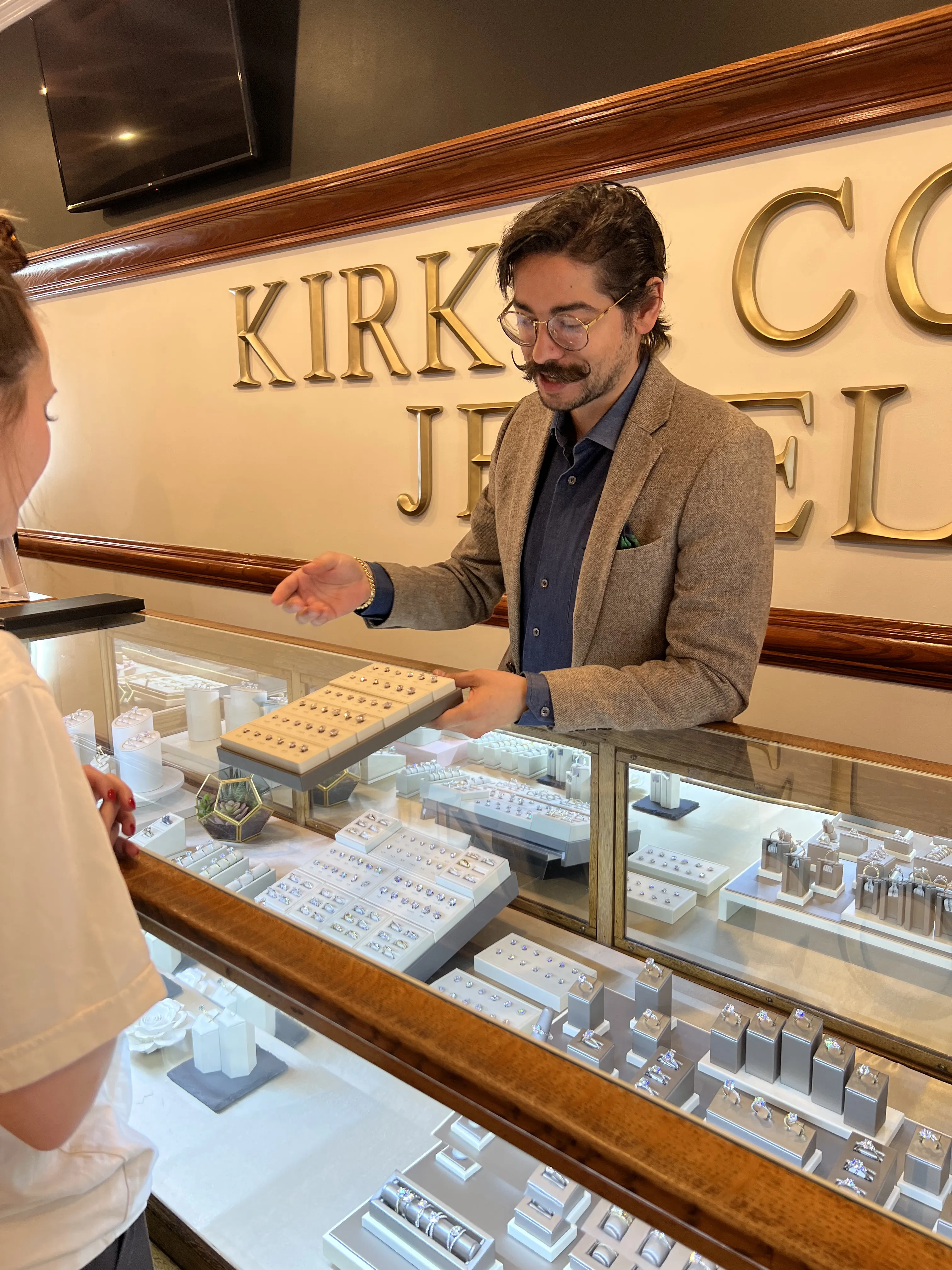
The best way to evaluate a lab grown diamond is next to a natural diamond of similar quality. We can pull both. No pressure. No upsell.
How lab grown diamonds are graded
New language from GIA. The same attention from us.
In October 2025, the Gemological Institute of America (GIA) launched a new grading system for lab grown diamonds. Instead of the D to Z color and IF to I3 clarity scales used for natural diamonds, GIA now uses two descriptive categories.
GIA Premium
The top tier.
D color, VVS clarity or higher, Excellent polish and symmetry, and an Excellent cut grade for round brilliants.
GIA Standard
A strong everyday grade.
E to J color, VS clarity, Very Good polish and symmetry (or Good for fancy shapes), and a Very Good cut grade for round brilliants.
Lab grown diamonds that do not meet the Standard criteria do not receive a GIA assessment. We walk you through every report so you know exactly what it means.
What we evaluate
The fundamentals have not changed.
The GIA terminology may be new, but what makes a beautiful diamond is not. When we source lab grown diamonds, we still evaluate:
- Cut and light performance. A poorly cut lab grown diamond looks dull, just like a poorly cut natural one.
- Clarity. Lab grown diamonds can have inclusions too. We look at where they are and whether you can see them.
- Color. Even within Premium and Standard, there is variation. We choose stones with strong color performance.
- Proportions and balance. We look for stones that perform in real-world light, not just under a loupe.

Lab grown diamonds in custom jewelry
More room to design.
Because the price is more accessible, lab grown diamonds give you more creative freedom. Clients often:
- Choose a larger center stone for the same budget
- Add more side stones, accents, or pavé
- Pursue a more elaborate setting
- Pair the diamond with colored stones
We see lab grown diamonds most often in engagement rings, anniversary pieces, fashion rings, stud earrings, tennis bracelets, and heirloom redesigns where a family stone is paired with lab grown accents.
Long-term considerations
Same diamond. Two differences to know.
A lab grown diamond wears, ages, and cleans the same as a natural diamond. The hardness, brilliance, and durability are identical. The differences show up in two places.
Resale value
A newer market.
Lab grown diamond prices have come down as production has grown. A lab grown diamond bought today will likely not keep the same share of its original value as a natural diamond of similar grade.
Heirloom value
A personal call.
Some clients feel origin matters for a piece meant to be passed down. Others feel the meaning is in the design, the story, and the relationship. Both views are valid.
Our approach
What we know, and what we don’t.
We will not tell you that lab grown is “the same as natural” or that natural is “always better.” Both are oversimplified. Instead, we walk you through the details, then let you decide.
- 01
The actual differences
Origin, grading, pricing, and value over time.
- 02
What you are buying for
How those differences relate to your piece and your plans.
- 03
The trade-offs
What you gain and give up with each choice.
- 04
The right fit
The kind of piece each one is best suited to.
Care, service, and support
Cared for the same way.
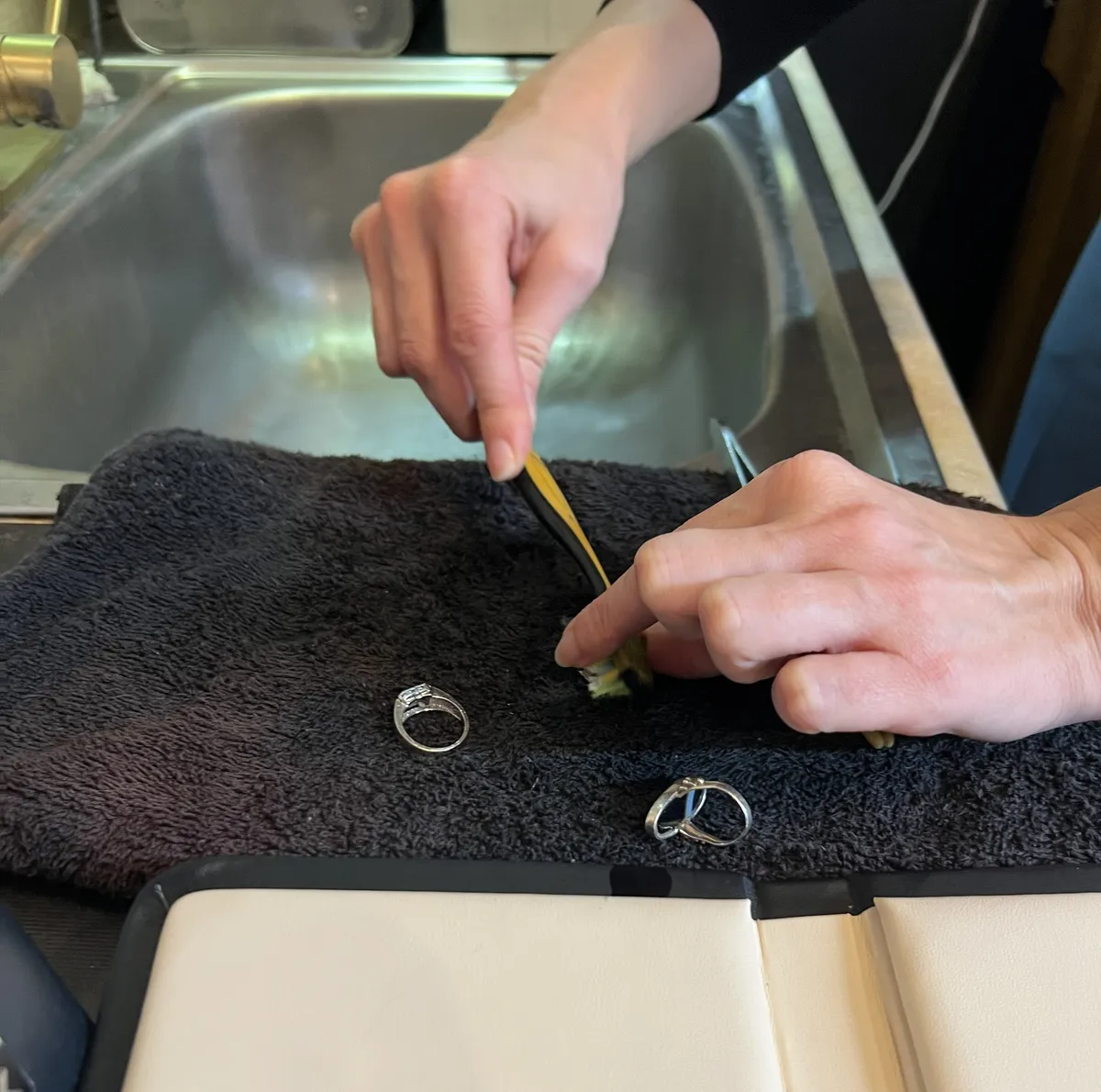
Lab grown diamonds need the same care as natural diamonds, and we treat them with the same attention. We recommend bringing your piece in every six months for a complimentary cleaning and inspection.
Our jewelers handle prong repair, retipping, and resizing in-house at our Milford store. Between visits, clean it gently with warm water, mild dish soap, and a soft brush.
Frequently asked questions
Good questions. Honest answers.
Still wondering about something? Call or text us at (513) 575-5475.
Are lab grown diamonds real diamonds?
Yes. Lab grown diamonds are chemically, physically, and optically identical to natural diamonds. They are pure crystalline carbon and test as real diamonds on every standard tester. They are not simulants like cubic zirconia or moissanite, which are entirely different materials.
Do lab grown diamonds look different from natural diamonds?
No. To the naked eye, lab grown and natural diamonds look the same. Even trained gemologists need specialized equipment to tell them apart.
Are lab grown diamonds graded by GIA?
Yes, but since October 2025, GIA grades lab grown diamonds differently than natural diamonds. Lab grown diamonds receive a GIA Laboratory-Grown Diamond Quality Assessment with one of two descriptors: Premium or Standard. Stones that do not meet the Standard minimum do not receive a GIA assessment.
Why did GIA change how it grades lab grown diamonds?
According to GIA, most lab grown diamonds fall into a narrow range of color and clarity, so the scales created for natural diamonds were no longer the clearest way to describe them. The new terms, Premium and Standard, reflect what GIA sees in the lab grown market.
Are lab grown diamonds less expensive?
Generally, yes. A lab grown diamond is typically more accessibly priced than a natural diamond of similar size and quality. We discuss specific pricing during your appointment based on the stones you are considering.
Do lab grown diamonds last as long as natural diamonds?
Yes. Lab grown diamonds have the same hardness (10 on the Mohs scale) and durability as natural diamonds, and they are suitable for daily wear in engagement rings and fine jewelry.
Can lab grown diamonds be used in custom jewelry?
Absolutely. Lab grown diamonds are often used in custom design because they offer flexibility in size and budget. They can be the center stone, the accent stones, or both.
Do lab grown diamonds hold their value?
Generally, no. Lab grown diamond prices have come down as production has grown, and individual stones tend to lose value over time. That matters if you are thinking about a future upgrade, a trade-in, or passing the piece down. Many clients choose lab grown for the upfront budget flexibility and accept this trade-off, but we want every client to understand it before deciding.
Should I choose a lab grown or natural diamond?
It depends on your priorities. If size, budget flexibility, or modern sourcing matters most, lab grown may be the right choice. If origin, rarity, tradition, or long-term value matters most, a natural diamond may suit you better. There is no wrong answer, only the one that fits what you are buying for.
Next step
Compare lab grown and natural in person.
We can pull both and let you see them side by side. No pressure. No upsell.
117 Main St · Historic Downtown Milford, Ohio