Materials and Metals
Men's bands have more material options than women's bands. The right choice depends on what you do with your hands, what you want it to look like, and how much you want to maintain it.
Precious Metals
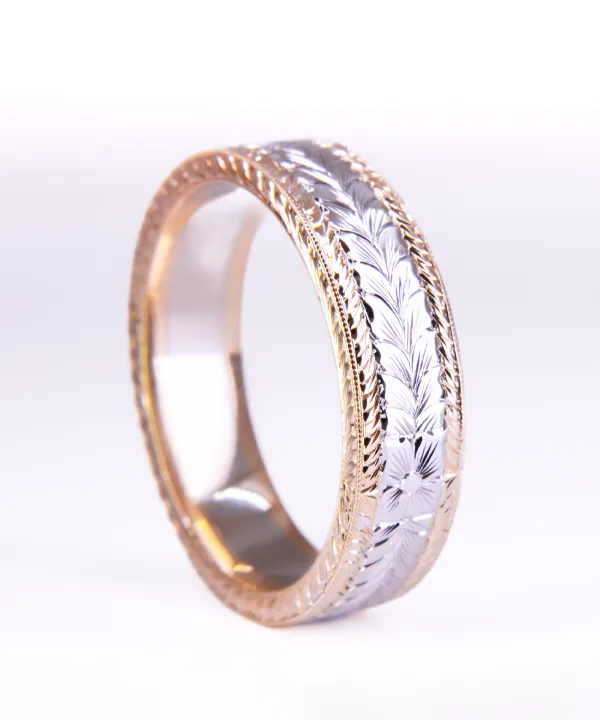
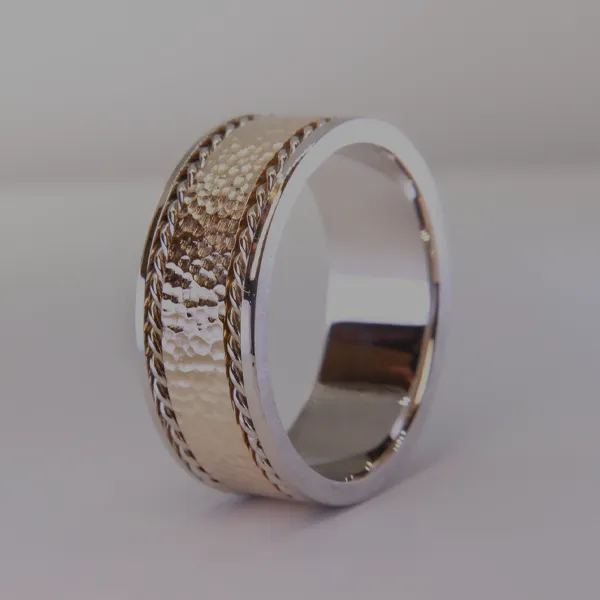
Yellow Gold. Warm, classic, traditional. Available in 10k, 14k, and 18k. 14k is the most common choice for everyday wear and offers a good balance of color, value, and durability. 18k is also fully suitable for daily wear, with a richer yellow color from the higher gold content. Many luxury bands are made in 18k.
White Gold. Cooler tone, plated with rhodium for added brightness. May require re-plating every few years to maintain its look. Available in 14k and 18k.
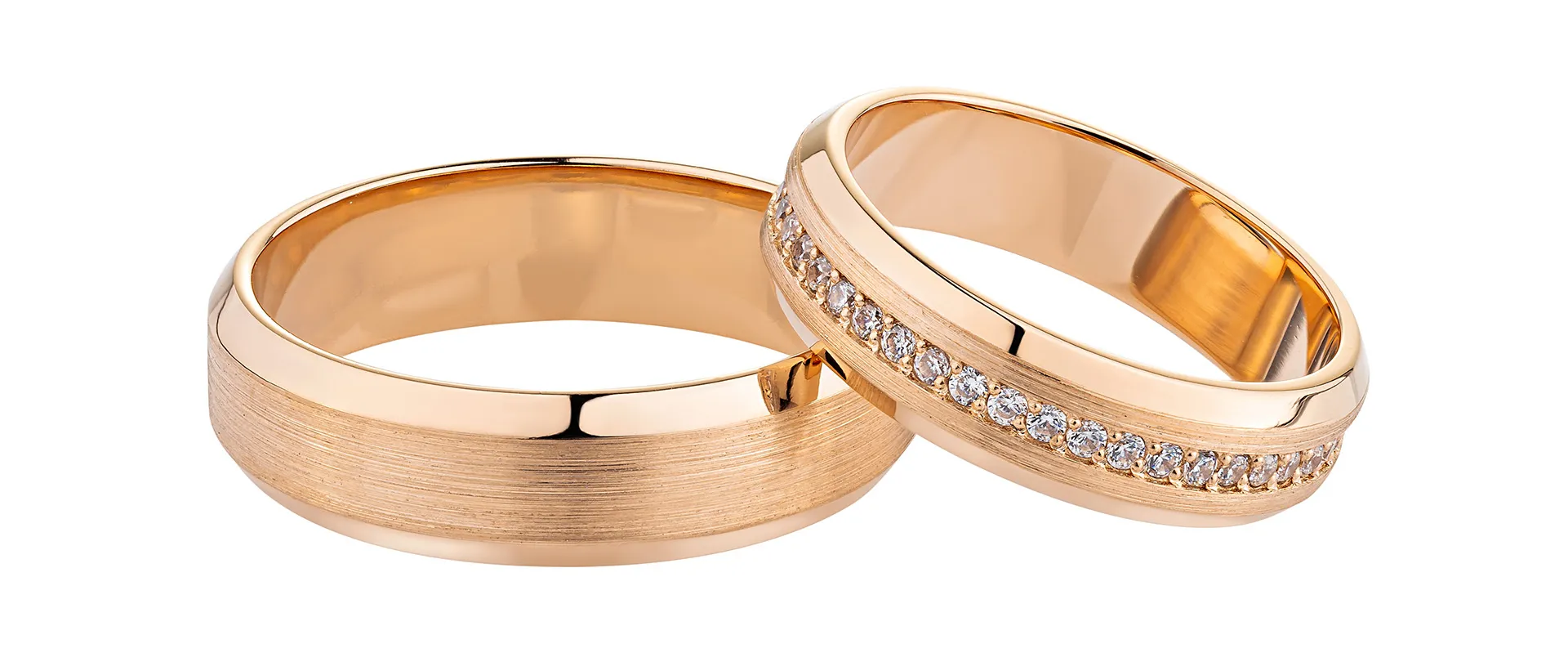
Rose Gold. A pink-toned gold alloyed with copper. Less common in men's bands but increasingly chosen for its distinctive look.Platinum. Naturally white, denser, hypoallergenic, and exceptionally durable. Holds its color without re-plating. Typically heavier than gold, which some men prefer.
Alternative Metals
Tungsten Carbide. Extremely hard and scratch-resistant. Will not bend. Cannot be resized (must be replaced if size changes). Often more accessibly priced than precious metals.
Titanium. Lightweight, strong, and hypoallergenic. Available in natural gray or with black coatings and inlays. Resizing is limited.
Cobalt Chrome. A bright white metal with high scratch resistance. A platinum-look alternative at a more accessible price point.
Damascus Steel. A patterned metal made by forging layers together, producing a distinctive wave or feather grain. No two bands are exactly alike.
Specialty Materials
Some clients want something unmistakably theirs. We can incorporate:
*Meteorite (genuine slices of iron meteorite, often Gibeon)
*Wood inlay (koa wood, walnut, others)
*Mokume Gane (layered precious metals creating a wood-grain pattern)
*Carbon fiber inlay
These materials are popular in custom designs and can be paired with traditional metals.